Not All Yoga Is Created Equal - Understanding what to vibe
Let me guess. You've looked at a yoga studio timetable and thought what the hell is the difference between all of these? Vinyasa. Slow Vinyasa. Hatha. Yin. Somatic. It reads like a wine list where you don't know what any of it means but you're too embarrassed to ask, so you just pick the one with the nicest name and hope for the best.
I get it. I've been there.
So let's break it down — no jargon, no pretentiousness, just the honest lowdown on what each style actually is, how it feels in your body, and why every single one of them has something to offer you. Because here's the thing: the "right" yoga is simply the one that meets you where you are right now. And where you are right now might be completely different to where you'll be in six months.
Vinyasa - The One That Makes You Sweat
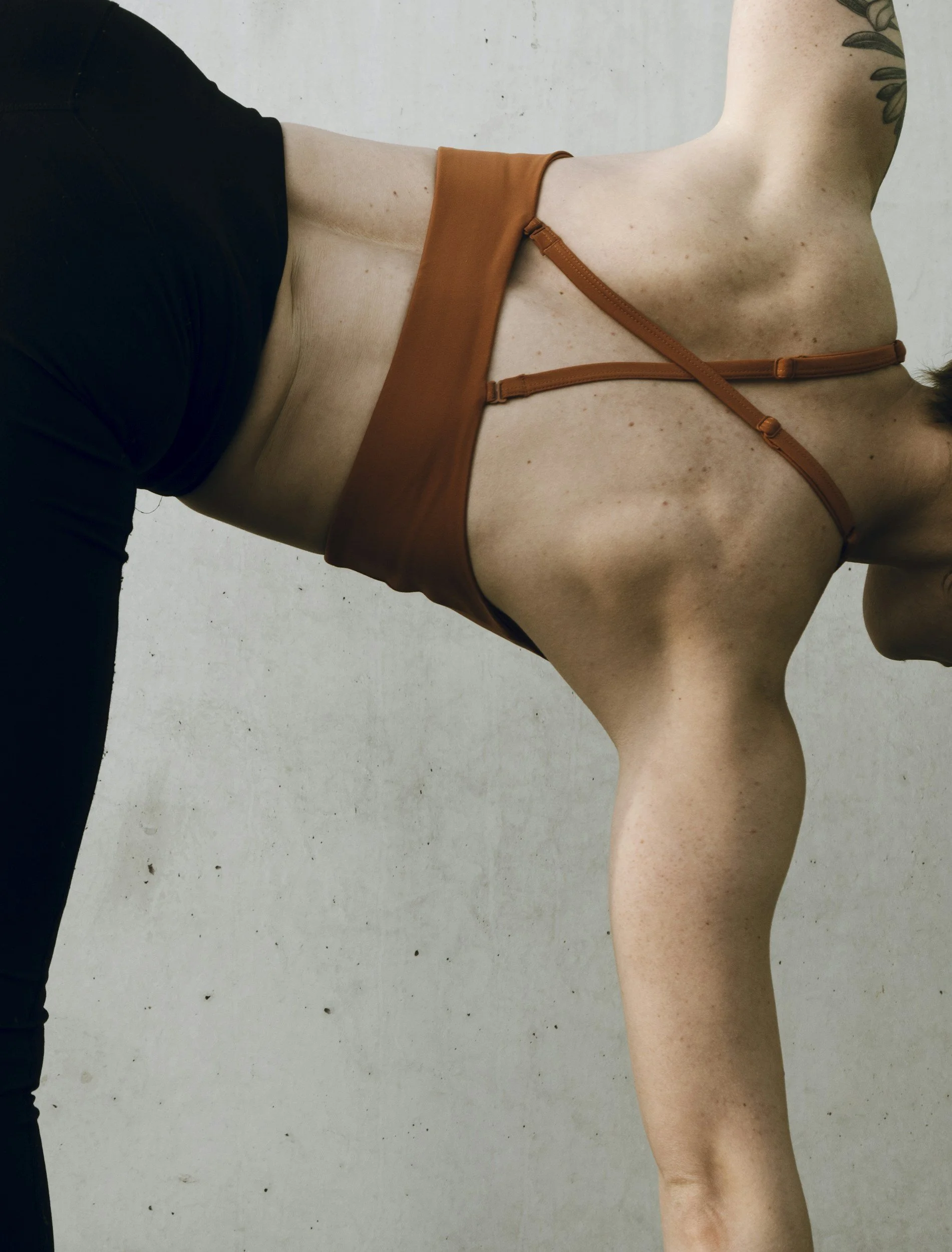
Vinyasa is flow. It's movement linked to breath, one pose rolling into the next, and it's usually set to music that makes you feel like you're in a movie montage of your best self. It builds heat, strength, and cardio endurance. It's dynamic, it's energising, and honestly? It's the one most people picture when they think of yoga.
If you like to move, if you need to get out of your head and into your body, if you want to leave class feeling like you've actually done something — vinyasa is your girl. She's strong, she's sweaty, and she doesn't let you sit in your thoughts for too long.
Slow Vinyasa - Her Calmer Sister
Same flow, same breath-to-movement connection, but dialled way down. Slow vinyasa gives you time to actually feel each pose instead of just passing through it. There's more space to notice what's happening in your body, more time to breathe, and way less chance of accidentally kicking the person next to you.
This is beautiful for anyone transitioning from faster-paced classes who wants to keep the flow but needs a bit more grounding. It's also gorgeous for those days when your nervous system is screaming please slow down but you still want to move.
Hatha - The OG
Hatha is the traditional one. It's where it all started. Individual poses held for longer, with a focus on alignment, breathwork, and building a strong foundation. It's less about flowing and more about being present in each posture — really understanding what your body is doing and why.
I'll be honest — I used to overlook hatha. It felt too slow, too basic, not "exciting" enough. But I've recently come full circle and found myself drawn to hatha in a way I didn't expect. After years of deep yin and somatic work (more on that in a sec), I'm now craving the fundamentals. The structure. The tradition. Hatha is teaching me the building blocks of yoga in a way that feels like coming home to something I skipped over the first time around. It's been a journey to get here, and I wish I'd given it more credit sooner.
Yin - The Deep, Quiet One
Yin is where you hold poses for three to five minutes (sometimes longer), targeting the deeper connective tissues — fascia, ligaments, joints. It's slow. It's still. And it will absolutely bring up every emotion you've been stuffing down for the last decade.
I'm not even joking. Yin was one of the first practices that helped me genuinely tap into my nervous system. When you hold a pose that long, there's nowhere to hide. Your body starts to talk to you — sometimes gently, sometimes not — and you learn to sit with discomfort instead of running from it. For anyone navigating stress, burnout, or that general feeling of being wired and tired, yin is medicine.
Somatic - The One Your Body Has Been Waiting For
Somatic movement is less about poses and more about re-patterning how your body holds tension, stress, and trauma. It's gentle, intuitive, and deeply personal. Think slow, intentional movements that help you reconnect with parts of your body you've been unconsciously gripping or guarding for years.
This one changed the game for me. Somatics helped me understand that my body was holding onto things my mind had long tried to move past. It taught me to listen — really listen — to what was stored in my neck, my shoulders, my jaw, my hips. Combined with yin, it became my pathway to nervous system regulation. It was the thing that finally made me stop performing wellness and actually start feeling it.
“Asana’s or poses on the mat are just one of the limbs of yoga”
So Which One Is "Best"?
None of them. All of them. It depends on where you're at.
Some weeks you need the intensity of vinyasa to shake off stagnant energy. Some weeks you need yin to slow down and feel. Some days your body is asking for the structure of hatha and some days it's whispering for the gentle release of somatics.
The magic is in listening. And that's actually where the deeper wisdom of yoga comes in.
The Eight Limbs (Because Yoga Is Way More Than Poses)
Here's something that might surprise you: the physical poses are only one of eight limbs of yoga. One out of eight. Let that sink in.
About 2,000 years ago, a philosopher called Patanjali wrote the Yoga Sutras and laid out what's known as the eight limbs of yoga. Think of them less as steps and more as interconnected parts of a whole, like limbs of a body, all growing together.
Yama - how we treat others. Kindness, honesty, not taking what isn't ours, not being greedy. Basically, don't be an arsehole. Simple in theory, a lifelong practice in reality.
Niyama - how we treat ourselves. Cleanliness, contentment, discipline, self-reflection, and surrender. This is the internal housekeeping that most of us avoid until we're forced to look at it.
Asana - the physical postures. The bit we all know. But here's the kicker: originally, asana just meant "seat." A comfortable position to sit in for meditation. Not a handstand. Not a backbend. Just a seat. Kind of takes the pressure off, doesn't it?
Pranayama - breath control. Conscious breathing practices that calm the nervous system, create energy, or bring focus. If you've ever done breathwork and felt like a completely different person afterwards, this is why.
Pratyahara - withdrawal of the senses. This is about tuning out the noise; the phone, the to-do list, the mental chatter and turning your attention inward. It's what happens in those quiet moments in yin when the room goes still and suddenly you can hear yourself think.
Dharana - concentration. Training the mind to focus on one thing. A mantra, your breath, the flame of a candle. It's the practice of not letting your brain run the show for five minutes.
Dhyana - meditation. Not the forced, sit-still-and-think-of-nothing kind. The real kind — where you become so absorbed in the present moment that the noise just falls away. It can't be forced. It happens when everything else lines up.
Samadhi - bliss. Connection. That feeling of complete peace and unity. It sounds lofty, but honestly? You've probably tasted it. That moment at the end of a yoga class where you're lying in savasana and you feel completely still, completely held, completely okay. That's a glimpse.
Why This Matters Across Every Style
Here's what I love about the eight limbs: they don't belong to any one style of yoga. They live in all of them.
When you practice non-harm (yama) toward yourself by choosing a slower class on a hard day; that's yoga. When you breathe consciously (pranayama) through a challenging vinyasa flow; that's yoga. When you turn inward (pratyahara) during a yin hold and let the world fall away; that's yoga. When you show up to a hatha class and practice discipline and self-study (niyama) by really learning the foundations; that's yoga.
The poses are just the doorway. The limbs are the whole house.
My Journey (Because It's Never Linear)
If you'd asked me a few years ago, I would've told you yin and somatics were my everything. They were the practices that cracked me open, helped me regulate my nervous system, and taught me to actually feel what was happening in my body instead of powering through life on autopilot.
And they were exactly what I needed at that time.
But lately? I've found myself gravitating toward hatha. Toward tradition. Toward the fundamentals I skipped over because they didn't feel "deep" enough. Turns out, building a strong foundation is deep work. Learning proper alignment, understanding the philosophy, respecting the roots of this practice, it's its own kind of transformation.
That's the beauty of yoga. It grows with you. What serves you in one season of life might shift completely in the next. And that's not a sign you're doing it wrong, it's a sign you're listening.